

Introduction
Quick answer: To start a skincare line, research your audience and competitors, write a business plan with clear pricing, confirm the cosmetic rules in every market you will sell in, formulate and safety-test your products, choose a manufacturer, design compliant packaging and launch through an online store. Your budget and timeline depend mainly on whether you go private label or custom formulation.
The steps below follow that order:
Research the market, audience and competitors.
Check the regulatory requirements for your markets.
Build your business plan, budget and team.
Formulate and test your products.
Choose a manufacturer and design compliant packaging.
Set up sales channels, including an online store.
Run operations: workflows, inventory and customer support.
The skin care industry has experienced significant growth in recent years. With a projected market size of $180 billion by 2024, it’s no surprise that many entrepreneurs are considering starting their own skin care line. The benefits of entering this industry include high profit margins, opportunities for creativity and innovation, and the potential to make a positive impact on customers’ lives.
A note on that market figure: the $180 billion by 2024 number is a third-party forecast and 2024 has now passed. Published estimates of the global skincare market differ widely because each report defines the category differently, so treat any single number as a sign of scale, not a precise target.
However, starting a skin care line requires careful planning and execution. In this article, we will outline the steps necessary to launch a successful skin care line, from researching the market to scaling the business. By following these steps, you can build a brand that stands out in a crowded market and delivers results to your customers.
Researching the Market
Researching the market is an essential step in starting a skincare line. This step involves identifying your target audience, studying your competition, and analyzing market trends to position your brand strategically.
Identifying Target Audience and Their Needs
The first step in researching the market is identifying your target audience and their needs. Your target audience consists of the people who will be most likely to use your products and are willing to pay for them. Understanding your target audience helps you create products that cater to their specific needs and preferences.
Start by segmenting your audience by demographics such as age, gender, income, and geographic location. You can also segment by psychographics such as personality, lifestyle, and values. Conduct surveys, focus groups, and interviews to gain insights into your target audience’s needs, pain points, and motivations. By understanding your target audience, you can create products that meet their unique needs and stand out from the competition.
Studying Competition
Studying your competition is crucial to developing a competitive advantage. Analyze your competitors’ product offerings, marketing strategies, and pricing strategies. This analysis will help you identify gaps in the market and create products that cater to unfulfilled needs.
Additionally, studying your competition’s social media presence, customer reviews, and website content can provide insights into what their customers are saying about their products. Analyze the feedback to identify areas where they are falling short and areas where they excel. Use this information to develop a unique selling proposition (USP) that sets your brand apart from the competition.
Analyzing Market Trends
The skin care industry is constantly evolving, and keeping up with the latest trends is crucial to staying ahead of the competition. Monitor market trends by attending trade shows, subscribing to industry publications, and conducting online research. Look for emerging trends such as the use of natural and organic ingredients, anti-aging products, and products targeting specific skin concerns such as acne and hyperpigmentation.
Analyze market trends to identify opportunities for product development. For example, if you notice a trend towards vegan and cruelty-free products, consider developing a line of vegan and cruelty-free skin care products. By staying up-to-date with market trends, you can position your brand as innovative and relevant to your target audience.
Navigating Regulatory Requirements
In addition to researching your target audience, competition, and market trends, it’s important to navigate the regulatory requirements for starting a skincare line. The skin care industry is heavily regulated, and failure to comply with regulations can result in legal and financial consequences.
Research the regulations governing the manufacturing, labeling, and advertising of skin care products. Consult with legal and regulatory experts to ensure that your products comply with all relevant regulations. By following regulatory requirements, you can ensure that your products are safe for use and build trust with your customers.
Cosmetic or Drug? Why Your Claims Matter
In the US, the FDA decides whether a product is a cosmetic or a drug by its intended use, which includes the claims you make on the label, website and ads. Cosmetics cleanse or beautify. Claims to treat a condition such as acne, or to give sun protection, generally make a product a drug (or both), which brings stricter rules. Write your product claims with this line in mind.
You can read how the FDA treats the two categories in its guidance on FDA authority over cosmetics.
US Cosmetic Rules: FDA and MoCRA
Cosmetic products and their ingredients (other than most color additives) do not need FDA approval before they are sold, but the company that makes or markets the product is legally responsible for its safety. Labels must not be false or misleading, must list ingredients on retail products, and must carry directions and warnings needed for safe use.
Under the Modernization of Cosmetics Regulation Act of 2022 (MoCRA), the FDA also expects the following. Check each point against the current FDA pages on MoCRA and registration and listing:
Facility registration: manufacturers and processors register their facilities with the FDA and renew every two years.
Product listing: the responsible person (the manufacturer, packer or distributor named on the label) lists each marketed cosmetic product, including its ingredients, and updates the listing annually.
Safety substantiation: you keep records that support the safety of each product. No specific tests are mandated, but the data should come from scientifically sound methods.
Adverse event reporting: serious adverse events must be reported to the FDA within 15 business days.
MoCRA exempts certain small businesses from good manufacturing practice, registration and listing requirements. The FDA says the exemption does not apply to products that regularly contact the eye’s mucous membrane, are injected, are for internal use, or change appearance for more than 24 hours. The statutory test is based on average gross annual sales over the previous three years, so confirm the current threshold with the FDA or a regulatory adviser before assuming you qualify.
EU and UK Cosmetic Rules
If you plan to sell in Europe, Regulation (EC) No 1223/2009 applies. Each product needs a responsible person established in the EU, a cosmetic product safety report completed before launch, and a notification through the Cosmetic Products Notification Portal (CPNP) before it goes on sale.
Great Britain runs its own system. Every cosmetic product needs a UK-based responsible person and must be notified through the GOV.UK Submit cosmetic product notifications service (SCPN) before it is placed on the market. Northern Ireland uses the CPNP instead. Rules change, so confirm current requirements for each country with the official regulator or a qualified regulatory consultant.
Developing a Business Plan
Developing a business plan is a critical step in launching a successful skin care line. A well-crafted business plan serves as a roadmap for your company, outlining your brand vision and mission, product line, pricing strategy, and financial projections. This section will guide you through the process of developing a comprehensive business plan for your skin care line.
Defining Brand Vision and Mission
Your brand vision and mission statement are the foundation of your business plan. Your vision statement describes your long-term aspirations for your brand, while your mission statement outlines your purpose and values.
To create a compelling brand vision and mission, start by reflecting on your personal values, interests, and goals. Consider how you can align your passion for skin care with a unique value proposition that meets the needs of your target audience. Your vision and mission statements should be concise, memorable, and aligned with your target audience’s needs and values.
For example, your vision statement might read: “To inspire women around the world to feel confident and beautiful in their own skin.” Your mission statement might read: “To create high-quality, natural skin care products that are affordable and accessible to all women, regardless of their skin type or concerns.”
Use these statements to guide all aspects of your business, from product development to marketing and sales. Your brand vision and mission should be woven into everything you do, from the packaging and design of your products to your social media content and advertising campaigns.
Creating a Product Line and Pricing Strategy
The next step in developing your business plan is creating a product line and pricing strategy. Your product line should reflect your target audience’s needs and preferences, as well as the trends in the market. Consider developing a range of products, including cleansers, toners, moisturizers, serums, and masks, to cater to different skin types and concerns.
When creating your product line, it’s essential to consider the ingredients you use. Consumers are increasingly interested in natural and organic ingredients, so consider incorporating these into your products. However, it’s also important to ensure that your products are effective and safe for use on all skin types.
Pricing your products can be challenging, as you need to balance affordability with profitability. Conduct market research to determine the average price range for similar products, and consider your production costs, overhead expenses, and desired profit margin when setting your prices. Keep in mind that your pricing strategy may evolve over time as you gather more information about your customers and the market.
Budgeting and Financial Projections
Budgeting and financial projections are crucial to ensuring the financial stability of your skin care line. Develop a detailed budget that outlines all of your expenses, including product development, manufacturing, marketing, and sales. Consider hiring an accountant or financial advisor to help you develop accurate projections.
In addition to a budget, create financial projections for the first few years of your business. These projections should include your projected revenue, expenses, and profits, as well as your break-even point. Use your projections to identify areas where you may need to adjust your strategy to ensure long-term financial success.
When creating your financial projections, it’s important to be conservative and realistic. Don’t overestimate your sales or revenue, as this can lead to cash flow problems and financial instability down the line.
How Much Does It Cost to Start a Skincare Line?
Costs vary widely with how you produce your products. Shopify’s guide to starting a skincare line puts the range at roughly $2,000 to $30,000, from a lean private-label launch to a custom-formulated range. Private label can take about four to 12 weeks, while custom formulation often takes months or longer.
Treat these as planning ranges, not quotes. Your own budget should also cover safety testing, packaging, insurance, regulatory filings and the cost of your online store and marketing.
Creating a Marketing Plan
A marketing plan is crucial to promoting your skin care line and generating sales. Your marketing plan should outline your target audience, positioning, and messaging, as well as your promotional tactics. Consider developing a mix of traditional and digital marketing tactics, such as print ads, social media marketing, influencer partnerships, and email marketing.
To create an effective marketing plan, start by identifying your target audience. Who are your ideal customers, and what are their demographics, interests, and pain points? Use this information to develop positioning and messaging that resonates with your target audience.
Consider developing a brand story and visual identity that sets your skin care line apart from the competition. Your branding should be consistent across all channels, from your website and social media to your product packaging and advertising.
To promote your skin care line, consider partnering with influencers or bloggers in the beauty and skin care industry. These individuals have a loyal following and can help you reach a wider audience. You may also consider offering promotions or discounts to encourage customers to try your products.
Sales Strategy
Your sales strategy should outline your plan for selling your products and generating revenue. Consider whether you will sell your products through online platforms, brick-and-mortar stores, or both. You may also consider partnering with retailers or wholesalers to distribute your products.
When developing your sales strategy, it’s important to consider your pricing strategy and target audience. You may need to adjust your sales channels and tactics to ensure that you are reaching your target audience and generating sufficient revenue.
Legal and Regulatory Requirements
Starting a skin care line involves navigating a range of legal and regulatory requirements. You will need to ensure that your products meet safety and quality standards, and that you comply with local, state, and federal regulations. This may involve obtaining licenses or permits, conducting product testing, and adhering to labeling and packaging requirements.
Consider consulting with a legal or regulatory expert to ensure that you are fully compliant with all relevant requirements.
Building a Team
Building a successful team is a critical aspect of any organization’s success. The process of building a team requires careful planning and execution, starting with identifying the necessary roles and responsibilities within the team. Once these roles and responsibilities have been identified, the organization can recruit and hire employees who possess the necessary skills and experience to fill these roles. Finally, it is essential to train and develop team members to ensure they have the knowledge and skills necessary to perform their roles effectively.
Identifying Necessary Roles and Responsibilities
The first step in building a team is to identify the necessary roles and responsibilities. This involves analyzing the organization’s needs and determining the functions that need to be performed to achieve its goals.
Some of the critical roles that every team requires include:
Leader/Manager: The team leader or manager is responsible for setting goals, developing strategies, and providing direction to the team. They must be skilled in leadership, communication, and decision-making to ensure the team’s success.
Project Manager: In many cases, teams are formed to complete specific projects. A project manager is responsible for overseeing the project’s progress, ensuring it stays within budget and on schedule, and communicating with stakeholders.
Technical Expert: Many teams require technical expertise to complete specific tasks or projects. Technical experts may include software developers, engineers, data analysts, or other professionals with specialized skills.
Creative Expert: In some cases, teams may require creative professionals, such as graphic designers, writers, or marketers. These individuals are responsible for developing creative solutions that meet the organization’s needs.
Support Staff: Finally, every team requires support staff, including administrative assistants, customer service representatives, and other personnel responsible for handling day-to-day tasks.
Recruiting and Hiring Employees
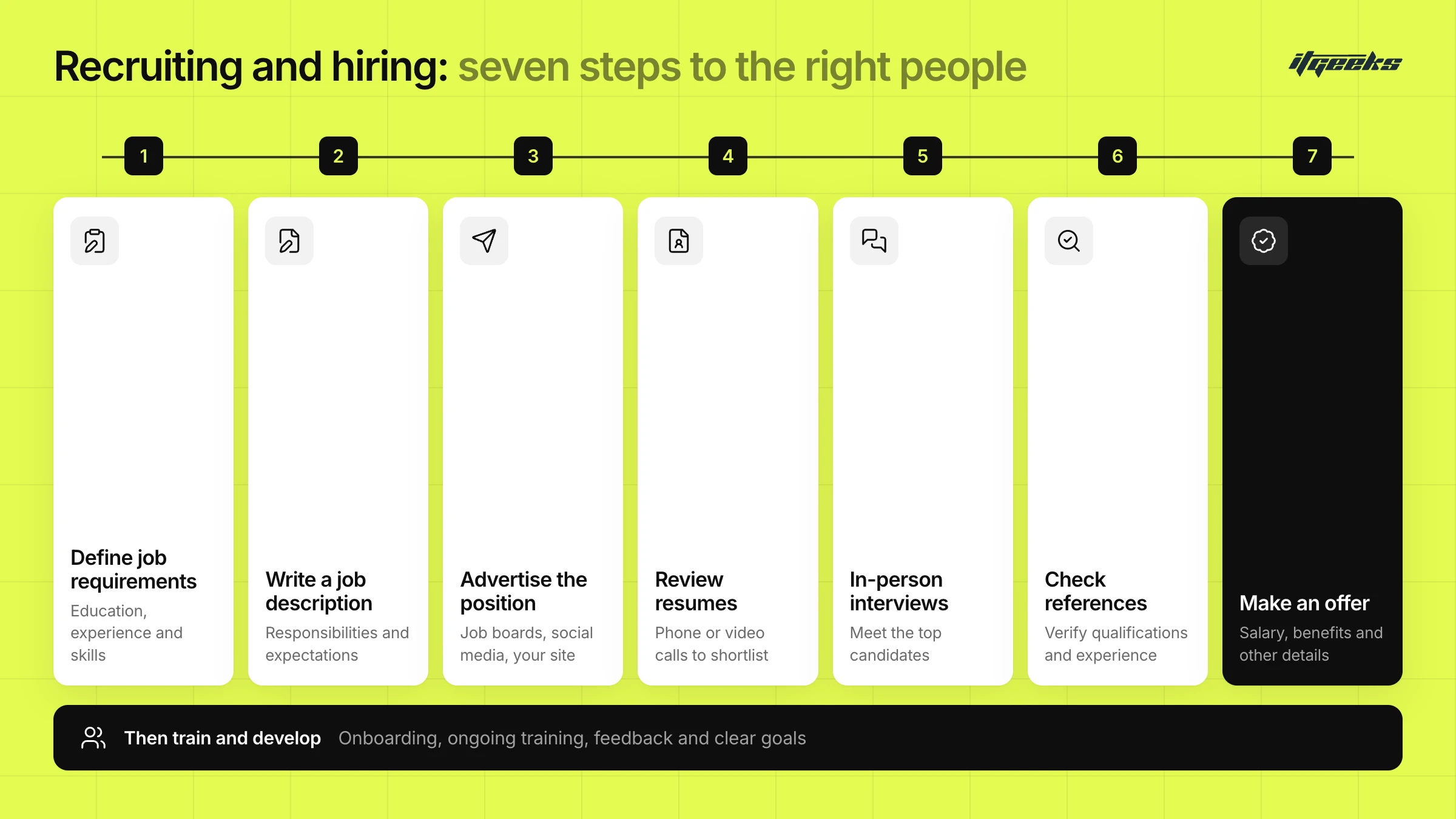
Once the necessary roles and responsibilities have been identified, the next step is to recruit and hire employees. This process involves creating job descriptions, advertising open positions, and reviewing resumes and applications to identify potential candidates. The following are some critical steps to follow when recruiting and hiring employees for a team:
Define Job Requirements: Start by defining the requirements for each position, including education, experience, and skills. This will help ensure that only qualified candidates are considered.
Create a Job Description: Create a detailed job description for each position. The job description should outline the responsibilities, qualifications, and expectations for the position.
Advertise the Position: Advertise the position on job boards, social media, and the organization’s website. This will help attract a wide range of candidates.
Review Resumes and Applications: Review resumes and applications to identify potential candidates who meet the job requirements. This process may involve conducting phone or video interviews to narrow down the list of candidates.
Conduct In-Person Interviews: Conduct in-person interviews with the top candidates to assess their qualifications, experience, and personality.
Check References: Check the candidate’s references to verify their qualifications and experience.
Make an Offer: Once a suitable candidate has been identified, make a job offer that includes salary, benefits, and any other relevant details.
Training and Development
Once the team has been assembled, it is essential to provide training and development to ensure that team members have the knowledge and skills necessary to perform their roles effectively. The following are some essential steps to follow when training and developing team members:
Create a Training Plan: Develop a comprehensive training plan that outlines the topics, objectives, and methods of training for each team member.
Provide Onboarding: Provide new team members with an onboarding program that includes an overview of the organization’s culture, policies, and procedures.
Offer Ongoing Training: Offer ongoing training and development opportunities to ensure that team members stay up-to-date with the latest trends and best practices in their respective fields.
Foster a Culture of Continuous Learning: Encourage a culture of continuous learning within the team. This can be done by offering access to online resources, encouraging team members to attend industry conferences and events, and providing opportunities for mentorship and coaching.
Provide Feedback: Provide regular feedback to team members on their performance. This can be done through performance reviews or regular check-ins.
Set Goals: Set clear goals for team members and provide them with the resources and support necessary to achieve these goals.
Encourage Collaboration: Encourage collaboration within the team to foster a sense of community and promote knowledge sharing.
Benefits of Building a Successful Team
Building a successful team has numerous benefits for organizations, including:
Increased Productivity: A well-built team is likely to be more productive, as each team member is focused on their specific role and responsibilities.
Improved Quality: A successful team is likely to produce higher quality work, as team members work together to ensure that all aspects of a project are completed to a high standard.
Better Communication: A well-built team is likely to have better communication, as team members are clear on their roles and responsibilities and can work together to achieve the team’s goals.
Higher Employee Morale: A successful team is likely to have higher employee morale, as team members feel valued and supported by their colleagues.
Reduced Turnover: A well-built team is likely to have lower turnover rates, as team members feel engaged and invested in the organization’s success.
Formulating Products
Formulating products involves a series of steps including choosing ingredients, developing formulas, and testing and improving products. This process is essential for creating products that are safe, effective, and appealing to consumers.
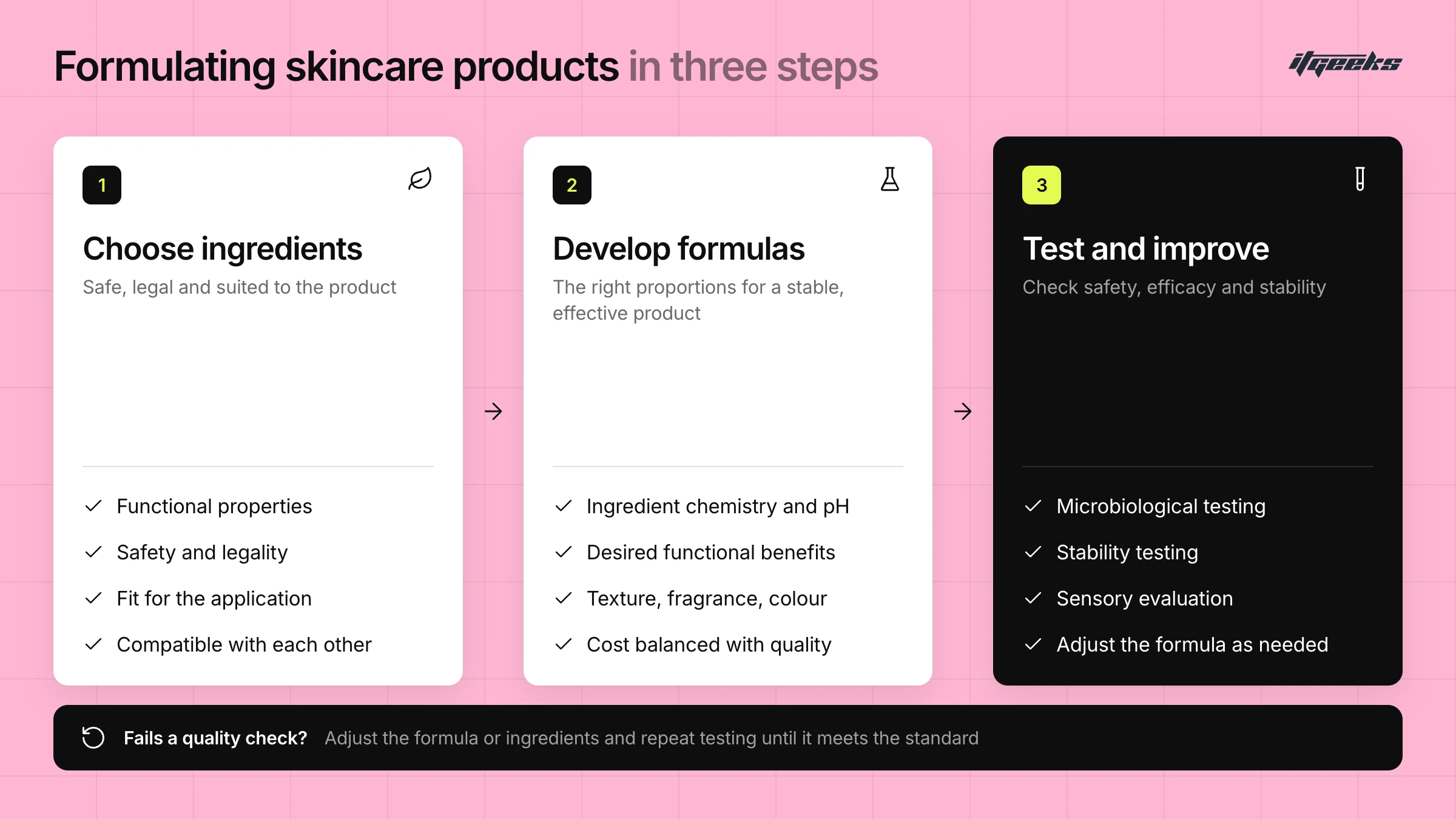
Choosing ingredients is the first step in the product formulation process. This involves identifying the functional properties required for the product, as well as selecting ingredients that are safe, legal, and suitable for the intended application. For example, if formulating a skin cream, ingredients with emollient and moisturizing properties may be selected, such as glycerin, jojoba oil, or shea butter. The chosen ingredients should also be compatible with each other and contribute to the desired sensory attributes of the product, such as texture, fragrance, and color.
Developing formulas is the second step in the product formulation process. This involves combining the chosen ingredients in specific proportions to create a stable and effective product. The formula should be optimized for the desired functional properties, sensory attributes, and cost-effectiveness. Formulating products requires a deep understanding of chemistry and formulation science, as well as knowledge of regulatory requirements and industry standards.
Testing and improving products is the third step in the product formulation process. This involves evaluating the product’s safety, efficacy, and stability through a series of tests, such as microbiological testing, stability testing, and sensory evaluation. Testing is essential to ensure that the product meets quality standards and is safe for use by consumers. If the product fails to meet quality standards, it may be necessary to adjust the formula or ingredients and repeat the testing process until the product meets the required standards.
The product formulation process can be challenging and time-consuming, but it is essential for creating high-quality products that meet consumer needs and preferences.
Private Label, White Label or Custom Formulation?
Before you choose ingredients, decide how you will source your formulas. There are three common routes:
White label: you put your branding on an existing product with minimal changes. It is the fastest and cheapest option, with the least differentiation.
Private label: you work with a private label lab to adapt a base formula to your specifications. It offers more customization and a moderate timeline.
Custom formulation: a cosmetic chemist or contract manufacturer develops a formula from scratch. It gives you a unique product, but costs more and takes longer.
Whichever route you take, the brand owner remains responsible for safety, claims and labeling, so ask any lab or manufacturer for their safety testing and documentation.
Choosing Ingredients
Choosing ingredients is the first step in the product formulation process. It involves selecting ingredients based on their functional properties, safety, and suitability for the intended application. Here are some tips for selecting ingredients:
Understand the functional properties required for the product. The functional properties of ingredients are the specific benefits they provide to the product. For example, in a skin cream, the functional properties may include moisturization, emollience, and skin barrier repair. By identifying the functional properties required for the product, you can select ingredients that provide those benefits.
Consider the safety and legality of ingredients. Ingredients must be safe for use by consumers and comply with regulatory requirements. Some ingredients may be restricted or prohibited in certain applications or regions. It is essential to research the safety and regulatory status of ingredients before selecting them.
Evaluate the suitability of ingredients for the intended application. Some ingredients may be more suitable for certain applications than others. For example, some preservatives may be more effective in oil-based formulations than in water-based formulations. It is important to consider the application and intended use of the product when selecting ingredients.
Ensure ingredient compatibility. The ingredients must be compatible with each other and contribute to the desired sensory attributes of the product. For example, some fragrances may be incompatible with certain preservatives, leading to discoloration or separation of the product.
Developing Formulas
Developing formulas is the second step in the product formulation process. It involves combining the chosen ingredients in specific proportions to create a stable and effective product. Here are some tips for developing formulas:
Understand the chemistry of ingredients. The chemical properties of ingredients must be taken into account when developing formulas. For example, some ingredients may be acidic or basic and may require pH adjustment to ensure stability and efficacy. It is important to understand the chemical interactions between ingredients and how they affect the properties of the final product.
Optimize the formula for the desired functional properties. The formula should be optimized to provide the desired functional properties, such as moisturization, cleansing, or skin barrier protection. This involves selecting the appropriate ingredients and determining the optimal concentration of each ingredient to achieve the desired benefits.
Consider the sensory attributes of the product. The sensory attributes of the product, such as texture, fragrance, and color, are important for consumer acceptance. The formula should be optimized to provide the desired sensory attributes, while still maintaining the functional properties of the product.
Balance cost-effectiveness with quality. The formula should be cost-effective without compromising the quality of the product. This involves selecting ingredients that provide the desired benefits at a reasonable cost, while still maintaining the safety and efficacy of the product.
Testing and Improving Products
Testing and improving products is the third step in the product formulation process. It involves evaluating the product’s safety, efficacy, and stability through a series of tests, such as microbiological testing, stability testing, and sensory evaluation. Here are some tips for testing and improving products:
Conduct microbiological testing. Microbiological testing is essential to ensure the product’s safety and prevent microbial contamination. This involves testing the product for the presence of harmful bacteria, fungi, and other microorganisms.
Conduct stability testing. Stability testing is essential to ensure that the product remains stable and effective over time. This involves testing the product’s physical, chemical, and microbiological stability under various conditions, such as temperature, humidity, and light exposure.
Conduct sensory evaluation. Sensory evaluation is essential to ensure that the product meets consumer preferences and expectations. This involves testing the product’s sensory attributes, such as texture, fragrance, and color, to ensure that they are consistent with the desired sensory profile.
Adjust the formula or ingredients as necessary. If the product fails to meet quality standards, it may be necessary to adjust the formula or ingredients and repeat the testing process until the product meets the required standards.
Manufacturing and Packaging
Manufacturing and packaging are two critical aspects of any business that produces physical products. The manufacturing process involves creating the product, while packaging involves designing the container or wrapping where the product will be sold. Choosing the right manufacturer, creating an effective packaging design, and ensuring product quality control are all crucial components of a successful manufacturing and packaging strategy.
Selecting a manufacturer
Choosing the right manufacturer is essential for ensuring that your product is produced efficiently, on time, and to the necessary standards. When selecting a manufacturer, there are several factors to consider:
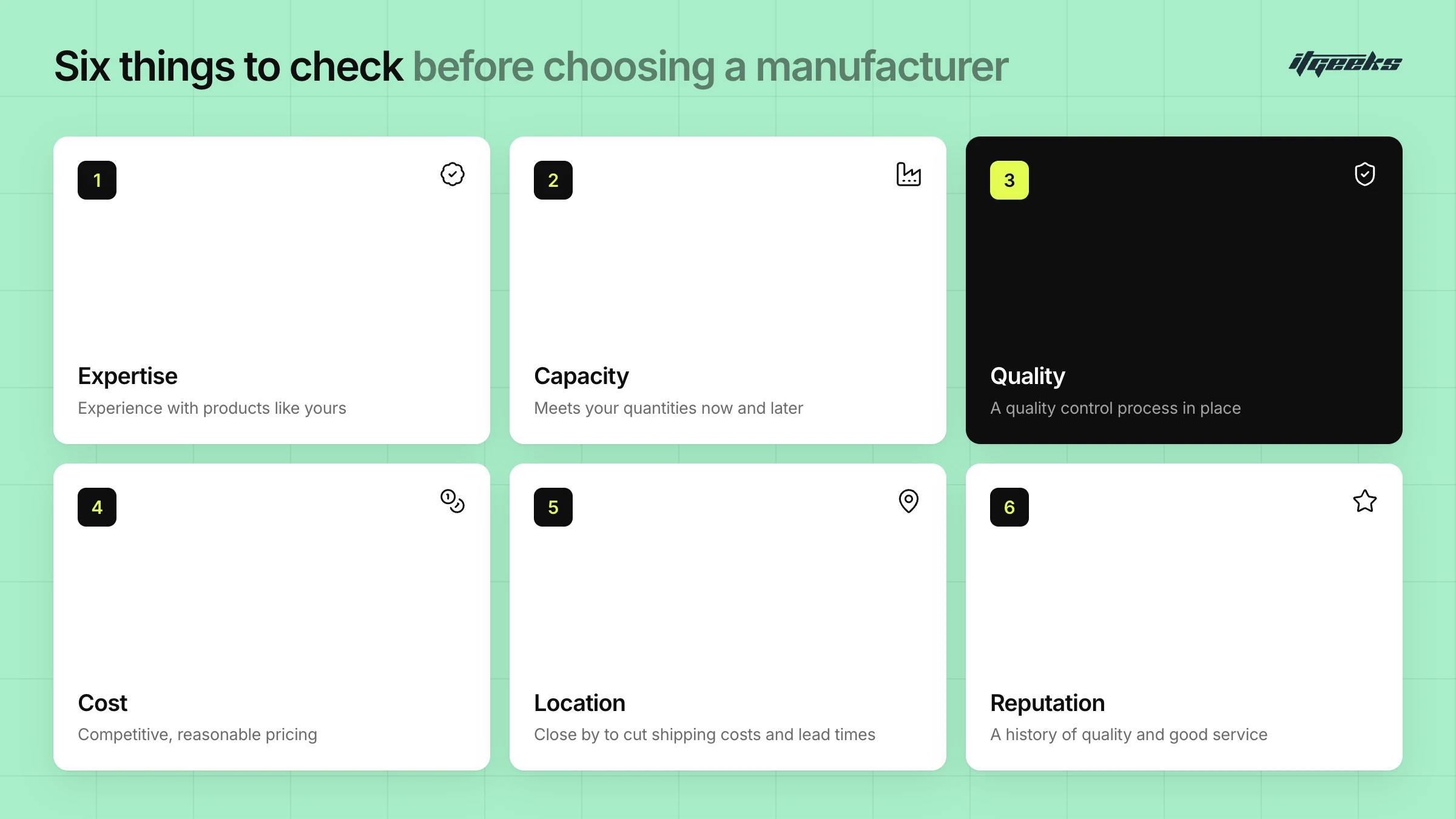
Expertise: Does the manufacturer have experience producing products similar to yours? Do they have expertise in the particular materials or processes required for your product? It’s important to choose a manufacturer who has the knowledge and skills needed to produce your product to the highest quality standards.
Capacity: Can the manufacturer produce your product in the quantities you require? It’s important to choose a manufacturer who can meet your production needs both now and in the future.
Quality: Does the manufacturer have a quality control process in place to ensure that your product meets your exact specifications? It’s essential to choose a manufacturer who takes quality seriously and has measures in place to ensure that your product is of the highest quality.
Cost: Is the manufacturer’s pricing competitive? While cost is not the only factor to consider, it’s important to choose a manufacturer who can produce your product at a reasonable price.
Location: Is the manufacturer located close to your business or target market? Choosing a manufacturer who is located nearby can help reduce shipping costs and lead times.
Reputation: What is the manufacturer’s reputation in the industry? Do they have a history of producing high-quality products and providing excellent customer service? Choosing a manufacturer with a good reputation can help ensure that your product is produced to the highest standards and that any issues are resolved quickly and effectively.
Creating packaging design
Packaging is an essential component of your product’s marketing strategy. It’s the first thing that customers see when they encounter your product, and it can have a significant impact on their purchasing decision. When creating a packaging design, there are several factors to consider:
Branding: Your packaging should reflect your brand identity and messaging. It should be consistent with your other marketing materials and help build brand recognition.
Functionality: Your packaging should be designed to protect your product during shipping and storage. It should also be easy for customers to open and use.
Sustainability: Customers are increasingly concerned about the environmental impact of packaging. Consider using sustainable materials and designing packaging that can be recycled or reused.
Aesthetics: Your packaging should be visually appealing and stand out on store shelves. Consider using bold colors, eye-catching graphics, and unique shapes to make your product stand out.
Information: Your packaging should provide customers with the information they need to make an informed purchasing decision. This includes product details, ingredients, and usage instructions.
Packaging is also a legal document. In the US, retail cosmetics must list their ingredients, carry directions and any warnings needed for safe use, and avoid false or misleading statements. Check the labeling rules for each market before you finalize artwork, so you do not have to reprint stock.
Ensuring product quality control
Ensuring product quality control is essential for producing products that meet your customers’ expectations and comply with relevant regulations. Quality control involves a series of checks and tests throughout the manufacturing process to identify any defects or issues that may impact the product’s quality. There are several steps you can take to ensure product quality control:
Establish quality standards: Define the quality standards for your product and communicate them clearly to your manufacturer. This includes specifying the materials, dimensions, and tolerances required for your product.
Conduct inspections: Inspect your product at each stage of the manufacturing process to ensure that it meets your quality standards. This includes inspecting raw materials, work-in-progress and finished goods.
Conduct testing: Conduct testing on your product to ensure that it meets relevant regulations and safety standards. This includes conducting tests such as durability testing, safety testing, and environmental testing.
Implement corrective actions: If any defects or issues are identified during the quality control process, take corrective actions to address them immediately. This may include reworking the product, replacing defective components, or adjusting the manufacturing process to prevent similar issues from occurring in the future.
Maintain records: Keep detailed records of all quality control activities, including inspections, testing, and corrective actions taken. This will help you track product quality over time and identify any patterns or trends that may indicate underlying issues in the manufacturing process.
Creating a Sales Strategy
A sales strategy is a plan that outlines the steps a business takes to increase revenue and profits. It includes identifying the sales channels through which a company will sell its products or services, developing marketing and advertising campaigns to attract potential customers, and creating a sales team or hiring a sales agency to execute the strategy.
Identifying Sales Channels
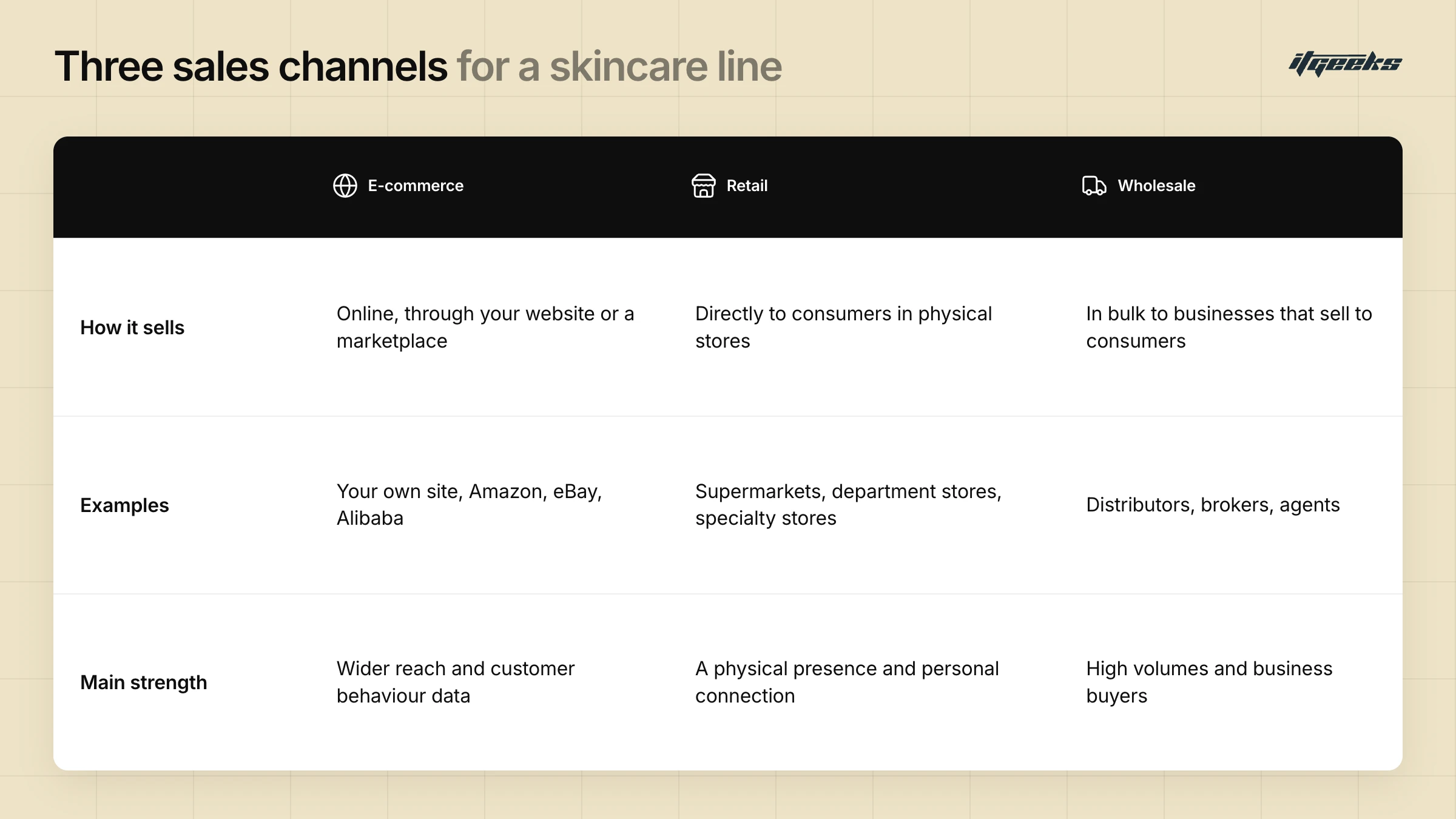
The first step in creating a sales strategy is to identify the sales channels through which a business will sell its products or services. There are several sales channels available, including e-commerce, retail, and wholesale.
E-commerce is an online sales channel that enables businesses to sell their products or services through their website or online marketplace such as Amazon, eBay, or Alibaba. An e-commerce sales channel can help businesses reach a wider audience as it eliminates geographical barriers. E-commerce also allows businesses to collect data on customer behavior, which can be used to improve sales strategies.
Retail sales involve selling products or services directly to consumers through physical stores. Retail sales channels include supermarkets, department stores, and specialty stores. Retail sales channels offer an opportunity for businesses to create a physical presence and establish a personal connection with their customers.
Wholesale sales involve selling products or services in bulk to other businesses that then sell them to consumers. Wholesale sales channels are ideal for businesses that sell products in high volumes or that target other businesses as their customers. Wholesale sales channels may include distributors, brokers, or agents.
Developing Marketing and Advertising Campaigns
Once a business has identified its sales channels, it is time to develop marketing and advertising campaigns to attract potential customers. Marketing and advertising campaigns are designed to create awareness about a company’s products or services, generate interest among potential customers, and ultimately drive sales.
Marketing campaigns may include various tactics such as email marketing, social media marketing, content marketing, search engine optimization (SEO), and pay-per-click (PPC) advertising. Email marketing involves sending promotional messages to a company’s email list, while social media marketing involves promoting products or services on social media platforms such as Facebook, Twitter, and Instagram. Content marketing involves creating valuable content such as blog posts, videos, and infographics that provide useful information to potential customers. SEO involves optimizing a website for search engines such as Google, while PPC advertising involves paying for ads that appear at the top of search engine results pages.
Advertising campaigns may include various tactics such as television, radio, print, and digital advertising. Television advertising involves creating commercials that air on television, while radio advertising involves creating commercials that air on radio stations. Print advertising involves creating ads that appear in newspapers, magazines, or billboards. Digital advertising involves creating ads that appear on websites, social media platforms, or mobile devices.
Creating a Sales Team or Hiring a Sales Agency
Once a business has identified its sales channels and developed its marketing and advertising campaigns, it is time to create a sales team or hire a sales agency to execute the strategy. A sales team is a group of individuals who work together to sell a company’s products or services, while a sales agency is a third-party organization that specializes in selling products or services on behalf of other businesses.
Creating a sales team involves hiring individuals who have the necessary skills and experience to sell a company’s products or services. Sales team members may include sales representatives, account managers, and sales managers. Sales representatives are responsible for prospecting potential customers, while account managers are responsible for managing existing customer accounts. Sales managers are responsible for overseeing the sales team and developing sales strategies.
Hiring a sales agency involves outsourcing the sales function to a third-party organization that specializes in selling products or services on behalf of other businesses. Sales agencies may include telemarketing firms, direct mail companies, and door-to-door sales organizations. Sales agencies can help businesses reach a wider audience and increase sales, but they may also be more expensive than creating an in-house sales team. It is important to carefully evaluate the capabilities and reputation of a sales agency before hiring them.
Factors to Consider When Creating a Sales Strategy
There are several factors to consider when creating a sales strategy, including the following:
Target Market: Understanding the target market is crucial when developing a sales strategy. A company must identify who its potential customers are and what their needs and preferences are. This information can be used to tailor the marketing and advertising campaigns to appeal to the target market.
Competitive Landscape: A company must also analyze its competitors and understand their strengths and weaknesses. This information can be used to develop a unique value proposition that differentiates a company’s products or services from those of its competitors.
Sales Goals: Setting realistic sales goals is important when creating a sales strategy. Sales goals should be specific, measurable, and achievable within a given timeframe. Sales goals can be used to track the progress of a sales strategy and make adjustments as needed.
Sales Metrics: Measuring the success of a sales strategy is important to determine if it is effective or not. Sales metrics such as conversion rates, customer acquisition cost, and customer lifetime value can be used to evaluate the performance of a sales strategy.
Sales Budget: Developing a sales budget is important when creating a sales strategy. A sales budget should include the costs associated with marketing and advertising campaigns, sales team salaries, and sales agency fees. The sales budget should be realistic and aligned with the sales goals
Selling Your Skincare Line Online with Shopify
For most new skincare brands, an online store is the most practical first sales channel because you control the brand experience and own your customer data. Shopify is built for this, and a few decisions have an outsized effect on sales:
Store setup and theme: choose a fast, clean theme that shows ingredients, skin-type guidance and usage instructions clearly. See our guides to Shopify store setup and choosing a Shopify theme.
Social proof: skincare buyers want to see results on real skin. Learn how to pick a product reviews app.
Replenishment: products people use up, such as cleansers and serums, suit subscriptions. The Shopify Subscriptions app lets you offer auto-billed plans that renew weekly, monthly or yearly.
Paid and organic traffic: see how Google Shopping ads drive revenue for Shopify stores, or explore our marketing services.
If you want help building the store itself, ITGeeks is a Shopify Platinum Partner. Our Shopify website development team can build and launch it, and you can contact us to talk through your plans.
Managing Operations
Managing operations is a critical aspect of any business. It involves overseeing all the activities and processes that go into producing and delivering a product or service. Effective management of operations requires a strategic approach that takes into account factors such as production capacity, resources, and market demand. Operations management is crucial for achieving organizational efficiency and ensuring customer satisfaction.
One important aspect of managing operations is to create a workflow that is efficient and effective. This involves designing a process flow that is well-structured and easy to understand. It is important to identify all the steps involved in the process, including any inputs and outputs, and to ensure that each step is completed in a timely manner. Establishing clear communication channels among team members can also help to streamline the workflow and improve efficiency.
Another important aspect of managing operations is to continuously monitor and analyze performance metrics. This includes tracking production output, inventory levels, and customer satisfaction. By regularly reviewing these metrics, managers can identify areas where improvements can be made and take corrective action as needed. This helps to ensure that the business remains competitive and profitable.
Establishing Workflows and Processes
Establishing workflows and processes is an essential component of effective operations management. It involves creating a clear and structured process flow that outlines the steps involved in producing and delivering a product or service. By establishing clear workflows and processes, businesses can improve efficiency, reduce waste, and enhance customer satisfaction.
To establish effective workflows and processes, it is important to first identify all the steps involved in the process. This includes identifying the inputs and outputs, as well as any potential bottlenecks or areas of inefficiency. Once the steps have been identified, it is important to create a clear and detailed process flow that outlines each step in the process.
In addition to creating a clear process flow, it is important to establish communication channels among team members. This can include setting up regular meetings, creating shared documents, and establishing clear lines of communication. By creating an open and transparent communication environment, team members can work together more effectively and efficiently.
Managing Inventory
Managing inventory is another critical aspect of effective operations management. It involves tracking inventory levels, ordering new inventory as needed, and ensuring that inventory is stored and handled properly. Effective inventory management can help businesses to reduce waste, improve efficiency, and increase profitability.
To manage inventory effectively, it is important to first establish a clear understanding of inventory levels. This includes identifying how much inventory is currently on hand, how much inventory is needed to meet demand, and how much inventory should be ordered to maintain optimal levels.
Once inventory levels have been established, it is important to create a clear and detailed inventory management plan. This plan should include processes for ordering new inventory, tracking inventory levels, and handling inventory that is damaged or expired.
Providing Customer Support
Providing excellent customer support is an essential component of any successful business. It involves responding to customer inquiries and concerns in a timely and effective manner, providing accurate and helpful information, and ensuring that customers are satisfied with the products or services they receive.
To provide effective customer support, it is important to establish clear communication channels with customers. This can include setting up a dedicated customer support team, creating a customer support hotline, and providing online resources for customers to access.
In addition to establishing clear communication channels, it is important to ensure that customer support staff are well-trained and knowledgeable about the products or services being offered. This can involve providing regular training sessions, creating a knowledge base for customer support staff to reference, and establishing clear guidelines for responding to customer inquiries and concerns.
Frequently Asked Questions
Do I need FDA approval to sell skincare products?
No. In the US, cosmetic products and ingredients do not need FDA approval before they are sold, apart from most color additives. You are, however, legally responsible for safety and truthful labeling, and under MoCRA you may need to register facilities and list products. Products making drug claims, such as treating acne or giving sun protection, face stricter rules.
How much does it cost to start a skincare line?
According to Shopify’s guide, starting a skincare line costs roughly $2,000 to $30,000, depending on your production method. Private label sits at the lower end, and custom formulation with multiple products at the higher end. Add safety testing, packaging, insurance, compliance filings, your store and marketing to your own budget.
How long does it take to launch a skincare line?
A private-label line can take about four to 12 weeks, according to Shopify. Custom formulation often takes months or longer because of development, stability and safety testing, and sample revisions. Allow extra time for packaging, regulatory filings and building your online store.
Do I need a cosmetic chemist to start a skincare line?
Not necessarily. Private label and white label routes let you build on a lab’s tested formulas. If you want a unique custom formula, work with a cosmetic chemist or a contract manufacturer. Either way, you remain responsible for product safety, claims and labeling.
Can I sell my skincare line on Shopify?
Yes. Shopify supports online stores for beauty and skincare brands, including subscriptions and product reviews through apps. You remain responsible for complying with cosmetic regulations in each market you sell to, including accurate ingredient lists and claims on your product pages.
Conclusion
The skin care industry has seen tremendous growth in recent years, providing a promising opportunity for entrepreneurs to start their own skin care line. However, before embarking on this journey, it is important to conduct thorough market research, develop a solid business plan, and assemble a skilled team.
To succeed in this competitive market, businesses need to identify their target audience, analyze market trends, and study the competition. Once a clear understanding of the market is established, the next step is to develop a strong brand vision and mission, create an appealing product line, and establish a pricing strategy.
Creating a team with the necessary skills and expertise is essential to bring the brand to life. From there, the focus shifts to formulating products using high-quality ingredients and testing them to ensure efficacy and safety. The manufacturing and packaging process should also be carefully managed to maintain product quality.
A successful sales strategy involves identifying the most effective sales channels, developing marketing campaigns, and building a sales team or hiring a sales agency. Finally, the launch of the brand should be carefully planned and executed, generating excitement and anticipation among customers.
Managing operations, including inventory, workflows, and customer support, is crucial to ensure long-term success. As the business grows, entrepreneurs should look for ways to expand their product line, enter new markets, and grow their sales channels.
Starting a skincare line is a challenging but rewarding endeavor for entrepreneurs who are passionate about creating products that improve people’s lives. With careful planning, a strong team, and a commitment to quality, success is within reach.